
Transportation
This section describes how to lift the robot and how to pack the robot for transportation.
Lift the robot
To lift the robot:
Remove the four M8 mounting bolts in the top plate of the robot. Use a T45 bit. Tighten the bolts to 15 Nm when remounting them.
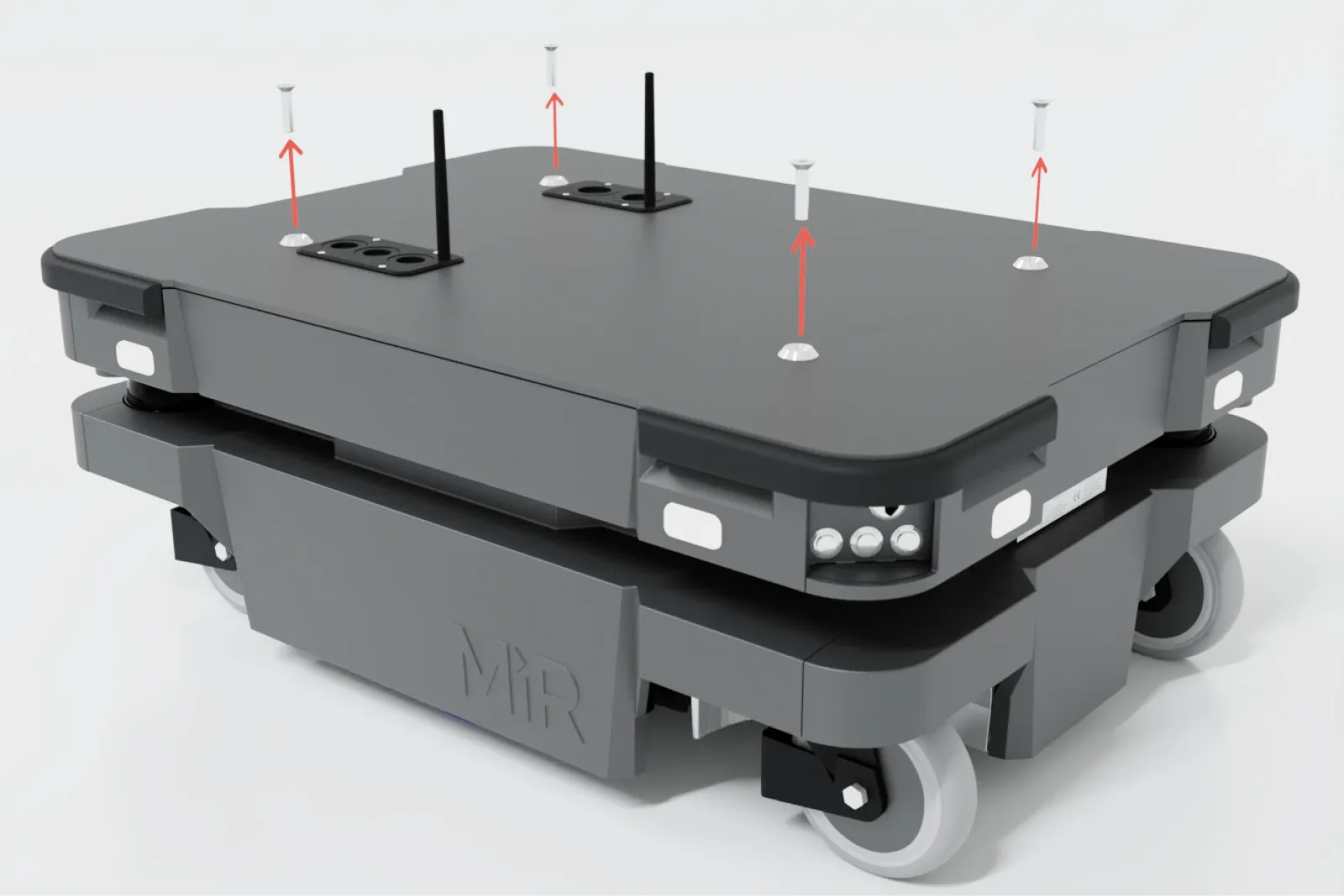
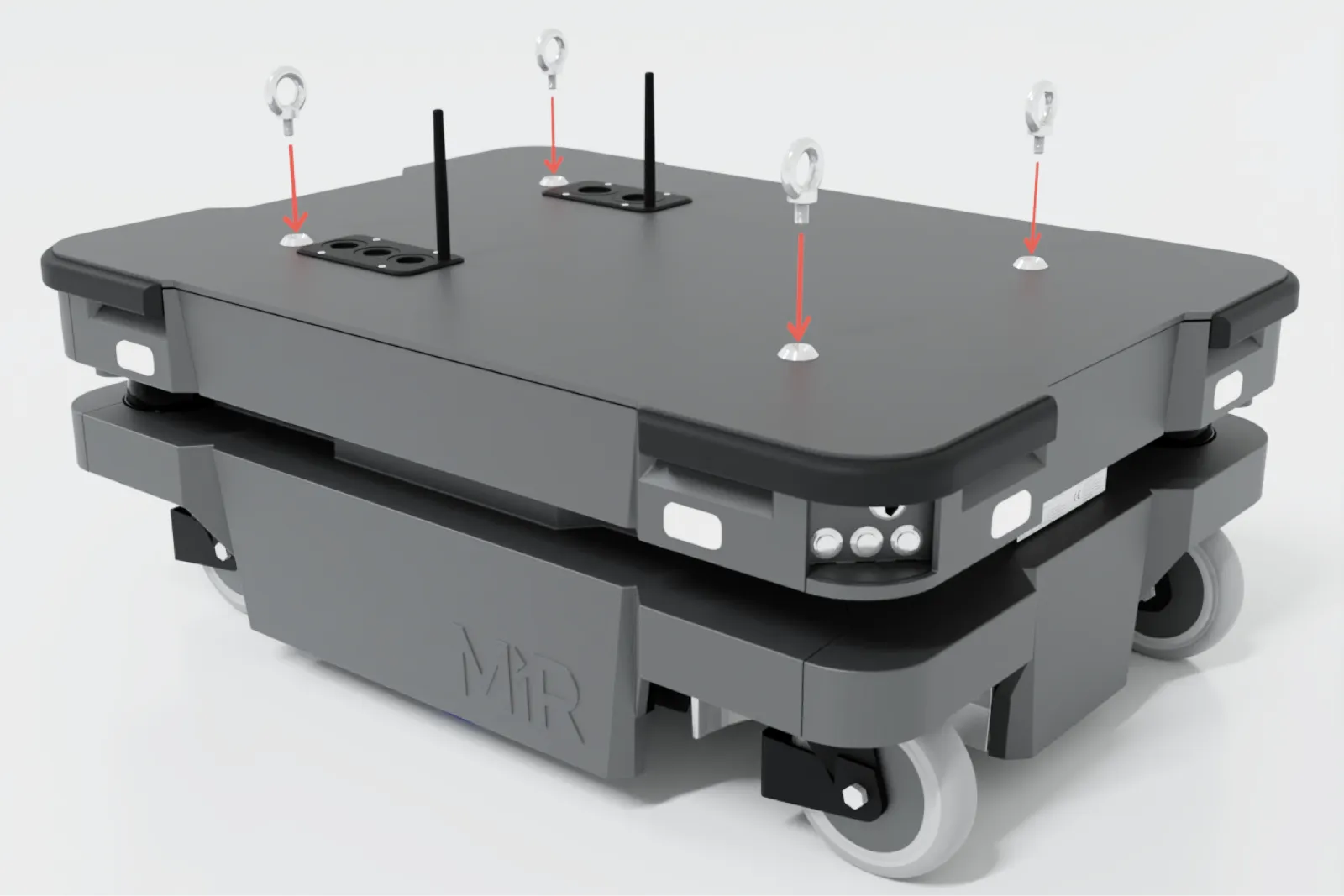
Mount four M8 × 16 mm eye bolts to the mounting holes. Screw the eye bolts all the way in. Do not tighten the bolts more than 7.5 Nm. Orient the eye bolts in parallel to the opposite diagonal bolt to ensure stable lifting.
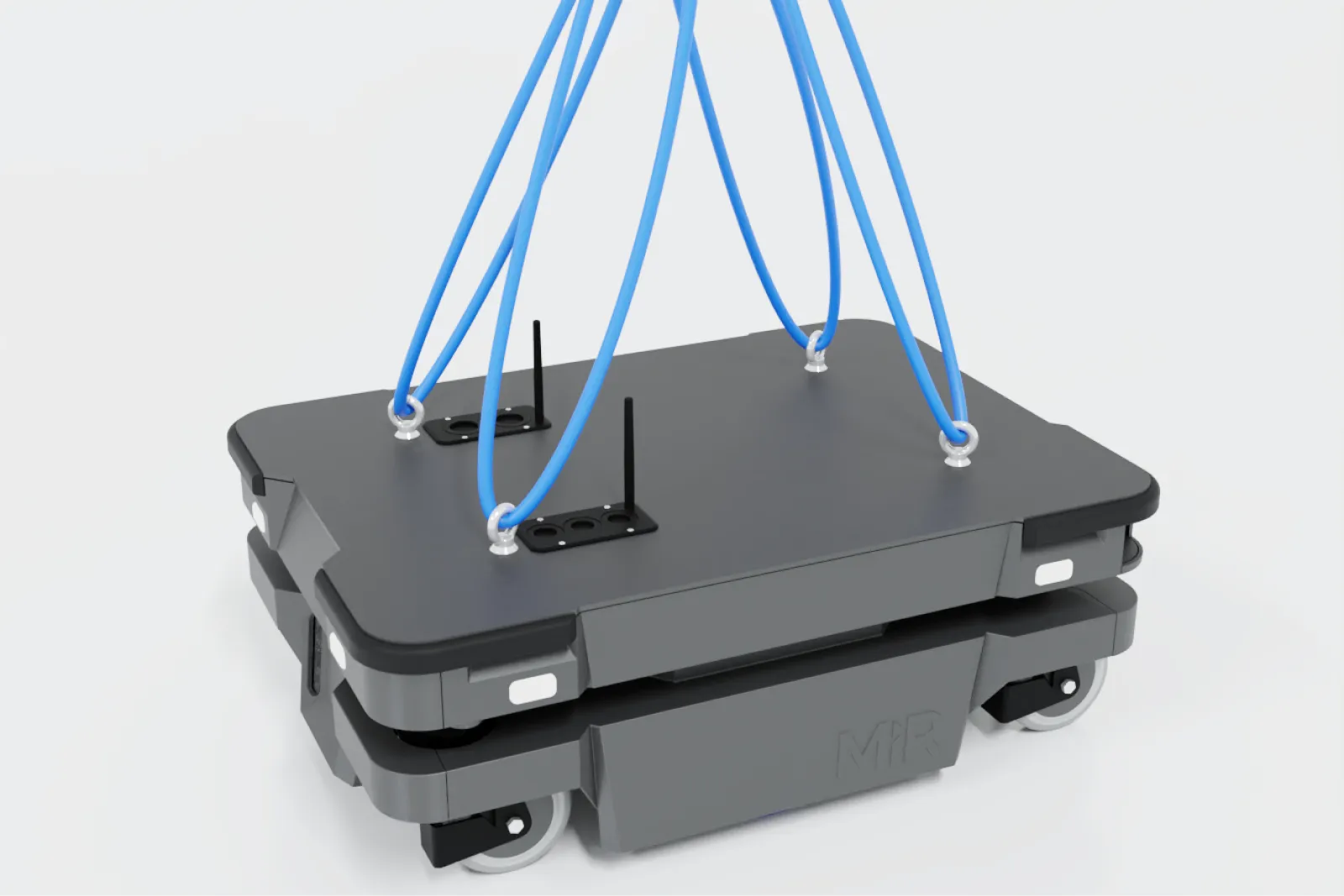
Use lifting device rated for at least 400 kg to lift the robot.
Pack the robot for transportation
Before packing the robot for transportation turn off the robot and disconnect it from the battery power source—see Power connection
Use the original packaging materials when transporting the robot.
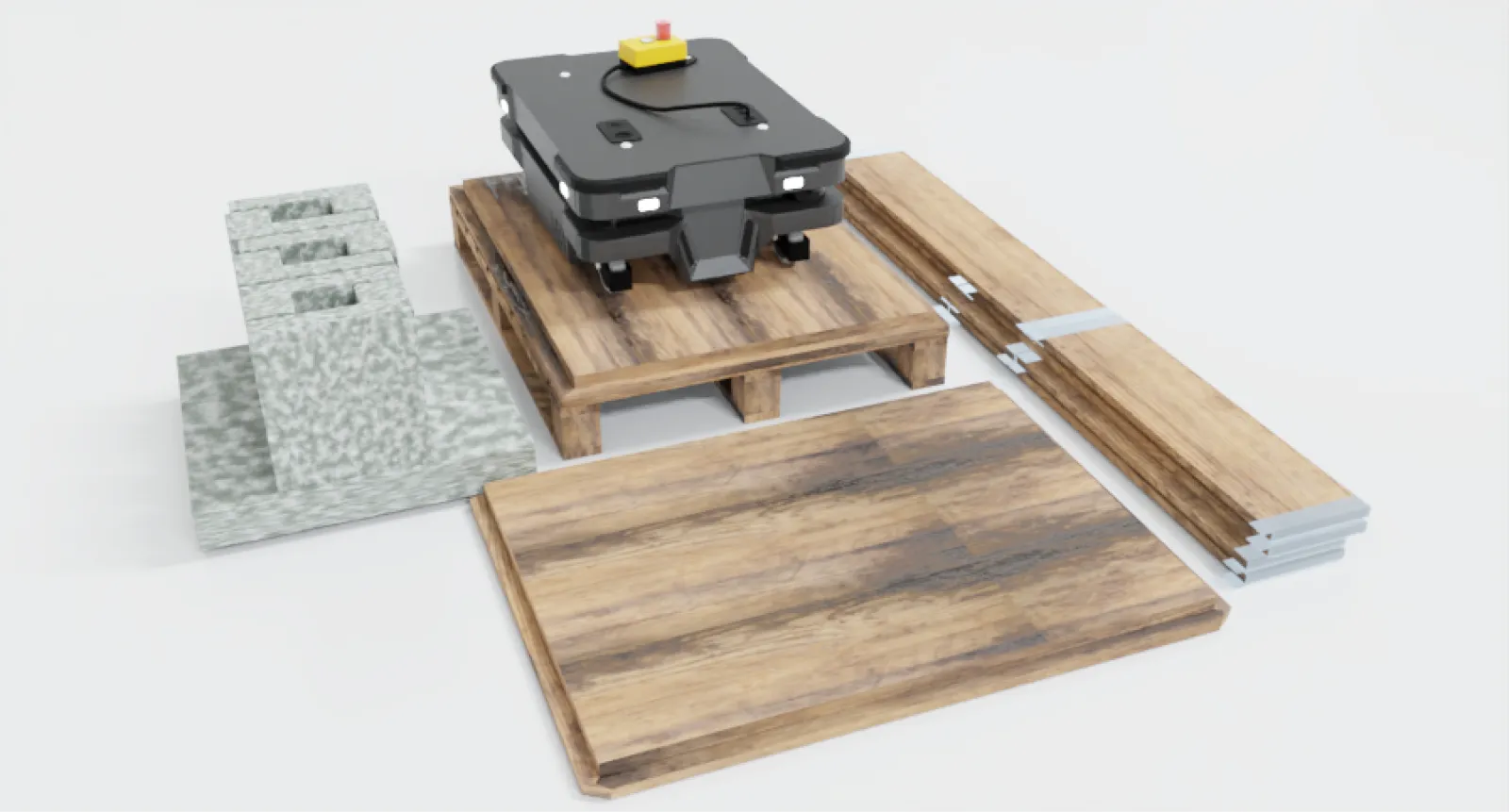
To pack the robot, repeat the steps in Unpack the robot in the reverse order.
Pack and transport the robot in an upright position. Packing and transporting the robot in any other position voids the warranty. You can find our warranty policy on MiR Support Portal.
Battery transport
Lithium-ion batteries are subject to special transportation regulations according to United Nations Regulation of Dangerous Goods, UN 3171. Special transport documentation is required to comply with these regulations. This may influence both transport time and costs. Different regulations apply depending on the mode of transportation.
When transporting lithium-ion batteries:
Transport the batteries in their original packaging.
If there is no original packaging, we recommend using a lithium-ion battery storage box.
If transporting inside the robot, the robot must have the same configuration it has when the robot was delivered. The battery power source must be disconnected from the robot and securely locked.
Do not expose the battery to direct sunlight.
Do not expose the battery to temperatures above 35°C.
Do not expose the battery to air humidity above 85%.

WARNING
Lithium-ion battery packs may get hot, explode, or ignite and cause serious injury if they are misused electrically or mechanically.
Observe the following precautions when handling and using lithium-ion batteries:
- Do not short-circuit, recharge, or connect with false polarity.
- Do not connect or charge a potentially defective or damaged battery.
- Do not expose to temperatures beyond the specified temperature range or incinerate the battery.
- Do not crush, puncture, disassemble, or drop the battery. The battery contains safety and protection devices, which, if damaged, may cause the battery to generate heat, explode, or ignite.
- Do not allow the battery to get wet.
- In the event the battery leaks and the fluid gets into one's eye, do not rub the eye. Rinse well with water, and immediately seek medical care. If left untreated, the battery fluid could cause damage to the eye.
- In case of fire, use water to put out the fire. There is no need for special extinguishing media.
- Do not touch damaged batteries with bare hands. Only personnel using suitable Personal Protection Equipment (PPE) and tools should handle damaged batteries.
- Isolate the battery and keep clear if the following conditions are observed:
- The battery exhibits abnormally high temperatures.
- The battery emits abnormal odors.
- The battery changes color.
- The battery case is deformed or otherwise differs from the normal electrical or mechanical condition.
- Do not modify or manipulate the battery. This may lead to considerable safety risks and is therefore prohibited.
- Never smoke or allow an open spark or flame in the vicinity of the robot's battery.
- Do not use the battery for anything other than MiR250 Base Robot.
- Only charge the battery using supported cable chargers or charging stations.